Introduction
Manually managed supplier onboarding processes create hidden operational costs, data inconsistencies, and audit risks. Application flows driven by email and phone communication are not scalable, not traceable, and require manual intervention in SAP.
If procurement teams want to accelerate and gain control over this process, they must manage every step—from supplier application to automatic vendor master creation in SAP—within a digital, integrated, and traceable structure.
In this article, we explore the risks of manual supplier onboarding and explain how a strong SRM–SAP integration can significantly accelerate the process.
How Sustainable Is a Manual Supplier Onboarding Process?
How are you currently managing your new supplier acquisition process?
Most likely, a supplier fills out a form, sends it via email, followed by several phone calls. Eventually, once approved, a vendor master record must be manually created in SAP.
In many cases, this process works. However, tracking where the process stands and how efficient it truly is becomes nearly impossible.
- Which supplier applied?
- Are the documents complete?
- Who is responsible for approval?
The list goes on. The reality is that most of these answers are hidden in someone’s inbox.
Supplier onboarding marks the beginning of a business relationship. Managing that beginning through phone traffic rather than a structured system directly impacts procurement quality.
What Risks Does a Manual Supplier Application Process Create?
Most procurement teams manage supplier applications through a combination of phone calls and email. While this approach may work initially, it creates serious problems when scaled.
Let’s examine these risks:
1. Untraceable Applications
A supplier sends an email, fills out a form, and submits documents. But:
- Are the documents complete?
- Has the application been routed to the correct category manager?
- How long has it been pending?
Internal email threads begin just to find answers. Completing a supplier onboarding process can take hours—or even days.
2. Data Inconsistencies
Supplier information may exist in personal notes, scattered across emails, while the vendor master record in SAP remains outdated for months.
If a supplier changes its IBAN, who updates it in SAP? When is it updated? Have you considered the financial and operational risk behind this?
3. Audit Gaps
Who owns the approval process?
Based on which criteria was the evaluation made?
Who approved it—and when?
In manual processes, these questions often remain unanswered. From a compliance perspective, this represents a significant weakness.
The Digitalization Landscape in Procurement: What Do the Numbers Say?
The challenges in supplier onboarding are not accidental. Industry data confirms that procurement functions are under serious digital transformation pressure.
1. Leadership Agenda: Digital Transformation Is Now a Strategic Priority
Procurement digital transformation ranks as the second-highest priority for Chief Procurement Officers.
— Deloitte Global CPO Survey, 2023 [1]
This shows that digitalization is no longer an IT initiative; it is directly on procurement leadership’s agenda. Supplier onboarding and application management are among the most practical starting points for this transformation.
2. Turkey Perspective: Ambitious Targets, Long Road Ahead
Procurement departments in Turkey have set an average digitalization target of 70% by 2027.
— PwC Global Digital Procurement Survey, 2024 [2]
The ambition of this target reflects the scale of the journey ahead. The smartest way to close this gap is not through massive transformation projects, but by digitalizing processes step by step. Small but sustainable gains lay the foundation for major transformation.
3. Governance Shift: Technology Decisions Are Strategic
By 2027, 50% of organizations will have supply chain technology leaders reporting directly to the CSCO.
— Gartner Supply Chain Research, 2025 [3]
This confirms that supply chain technology decisions are no longer operational—they are strategic. Supplier management systems are no longer efficiency tools; they are board-level competitive decisions.
Three data points, one clear message:
Digitalization is no longer optional—it is a requirement for staying competitive. And the most solid starting point is making supplier relationships digital and traceable from the very first step.
How Can You Eliminate Risks in the Supplier Application Process?
The complexity and time loss in supplier onboarding do not stem from the process itself, but from the lack of a strong SRM solution and integration.
Untraceable applications, inconsistent data, and audit gaps are all consequences of manual processes.
Let’s break it down.
SRM solutions allow you to manage procurement and supplier relationships digitally on a single platform. Integration ensures seamless data flow between your SRM system and SAP ERP.
For example, once a supplier application is approved in your SRM system, a vendor master record is automatically created in SAP ERP.
An effective SRM–SAP integration includes:
- A standardized digital application form completed by the supplier
- Automatic routing to the correct procurement category manager
- System-managed document validation and approval workflows
- Automatic vendor master creation in SAP after approval
- Automatic portal access credentials sent to the supplier
Most organizations already perform these steps. The difference lies in whether they are managed through a structured system or individual effort.
How Does the Supplier Application Process Work with JetSRM?
JetSRM is an AI-powered supplier relationship management portal that operates directly within SAP, enabling procurement and supplier processes to be managed on a single integrated platform.
As of 2026, JetSRM consists of 11 modules, digitalizing processes ranging from application management and supplier evaluation to RFQ collection, order management, tender management, and price updates.
The Application Management Module transforms new supplier onboarding into a centralized and traceable process within SAP.
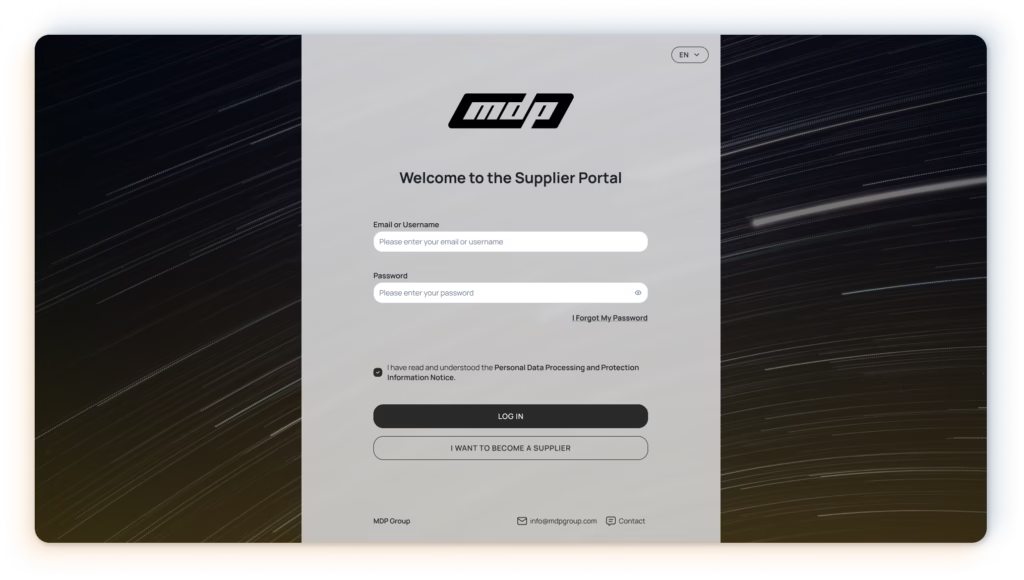
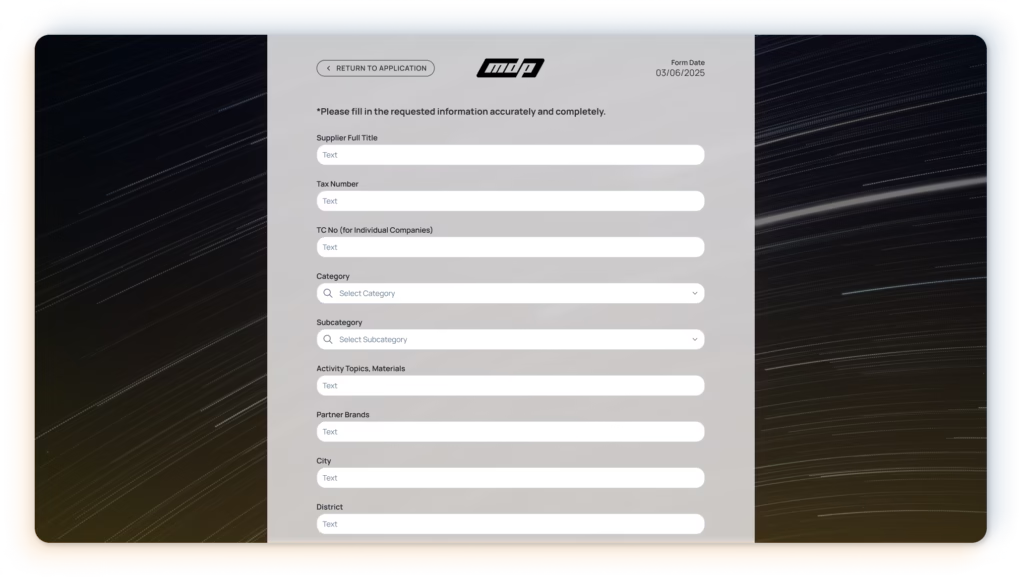
1.Digital Application and Document Management
Candidate suppliers complete the supplier registration form via the portal. The form can be customized according to your requirements, allowing suppliers to submit all necessary information and documents digitally.
Once submitted, the application enters JetSRM—not your inbox.
Example MDP Group
2. Approval Workflow and Category Routing
Applications are automatically routed to the responsible procurement specialist based on category or sub-category definitions.
The procurement specialist evaluates and approves the application directly through the portal.
3. Automatic Vendor Master Creation in SAP
Once approved, a vendor master record is automatically created in SAP.
At the same time, portal access credentials are sent to the new supplier via email. From that point onward, the supplier becomes fully integrated into your digital procurement ecosystem.
4. Keeping Supplier Data Up to Date
The process does not end with onboarding.
Supplier data maintenance is also managed through the system. Suppliers are responsible for updating critical information, such as IBAN or contact detail,s via the portal.
Update requests go through an approval workflow, and once approved, changes are automatically reflected in the SAP vendor master record.
Procurement teams can also send periodic data update requests to all suppliers, ensuring that the supplier database remains accurate and up to date at all times.
The Business Value for Procurement Teams and the Organization
Digitalizing the supplier onboarding process is not merely an operational improvement—it directly impacts business outcomes.
- Supplier applications become centralized and traceable. No application gets lost.
- Vendor master records in SAP are created accurately without manual intervention.
- Approval processes become documented and auditable, supporting compliance requirements.
- Procurement teams shift their focus from administrative workload to strategic supplier evaluation.
- Supplier data remains continuously updated through structured periodic requests.
Conclusion
Manual supplier onboarding processes driven by phone calls, email, and spreadsheets result in untraceable applications, data inconsistencies, and audit gaps.
Procurement leaders in Turkey have set a 70% digitalization target by 2027. Achieving this goal requires transitioning procurement and supplier relationship processes into a structured SRM framework.
JetSRM supports organizations in this transition toward the future of procurement. By offering an end-to-end, integrated SRM solution, it enables centralized and traceable management of all supplier-related processes.
With the JetSRM Application Management Module, you can fully digitalize your supplier onboarding process.
References
[1] Deloitte Global Chief Procurement Officer Survey 2023 — deloitte.com
[2] PwC Küresel Dijital Satın Alma Araştırması 2024 (Türkiye datas, via TEDAR ) — pwc.com.tr
[3] Gartner Supply Chain Technology Trends & Digital Transformation Research, 2025 — gartner.com
[4] JetSRM Supplier Portal website , — https://jetsrm.com/en/home-page/
[5] SAP ile Bütünleşik Tedarikçi İlişkileri Yönetimi: JetSRM Webinarı , 2024 — https://www.youtube.com/watch?v=lvI0J3EvOek