The Importance of Speed, Security, and User Experience in the Digital Supply Chain
Supply chain management is no longer limited to placing orders and making payments. In today’s competitive business environment, speed, accuracy, and transparency have become the most critical factors determining the sustainability of procurement processes. For this reason, companies increasingly rely on platforms like JetSRM (Supplier Relationship Management) to manage interactions with their external stakeholders.
While JetSRM acts as a digital bridge for organizations, it must also offer a flexible structure that supports company-specific business models. Standard software solutions are not always sufficient; custom requirements such as special quality approval workflows, subcontracted manufacturing tracking, or additional data collection screens often make process development on JetSRM inevitable. However, it is crucial that these developments are user-centric and seamlessly integrated with SAP.
1. User-Centric Process Design
When creating a new process, the primary focus should not be technology, but user experience. A smooth and intuitive design that suppliers can use without training increases operational efficiency and ensures uninterrupted workflows.
Simple and Intuitive Interfaces
Screens developed on JetSRM should be clean, uncluttered, and clearly guided. Users should immediately understand which steps to follow as soon as they log into the portal.
Data Validation at the Source
The most effective way to prevent incorrect data from reaching SAP is to validate it directly on JetSRM.
For example, incorrect date formats, excessive order quantities, or logical errors should be instantly blocked by the system, with clear guidance provided to the user.
This approach significantly improves data quality while substantially reducing the back-office workload.
Mobile Compatibility
Suppliers are not always working at a desk. Therefore, it is critical that all screens function smoothly on mobile phones and tablets. Mobile compatibility ensures 24/7 accessibility to the system.
2. JetSRM – SAP Integration: Secure and Lean Data Transfer
Once the process design is complete, the key question becomes:
“How can this data be transferred to SAP quickly, securely, and accurately?”
Direct and High-Performance Integration
Middleware solutions often introduce additional costs and latency. The modern approach is direct communication between JetSRM and SAP.
This enables:
- Data to be processed in SAP within milliseconds
- Elimination of additional integration costs
- High-performance and streamlined processes
Security Model
Authentication: SAP only accepts requests coming from authorized JetSRM services, preventing unauthorized access attempts.
Principle of Least Privilege: The integration user is granted only the permissions required for its specific process, protecting other SAP modules in case of a potential risk.
3. Clean Data = Stronger Strategic Decisions
Thanks to well-designed user interfaces and robust validation rules, the data transferred to SAP becomes far more reliable. “Clean data” provides significant advantages in areas such as:
- Accurate inventory analysis
- Clear supplier performance measurement
- Seamless reporting
- Faster operational management
Instead of spending time correcting operational errors, management teams can focus on strategic decision-making.
4. Digital Partnership: Stronger Collaboration with Suppliers
A user-friendly, fast, and transparent JetSRM system increases suppliers’ trust in the organization. When suppliers see that the data they submit is instantly processed and reflected in SAP, they become more collaborative and more aligned with business processes.
This lays the foundation for a long-term, sustainable digital partnership between the company and its suppliers.
The Business Impact of JetSRM and SAP Integration
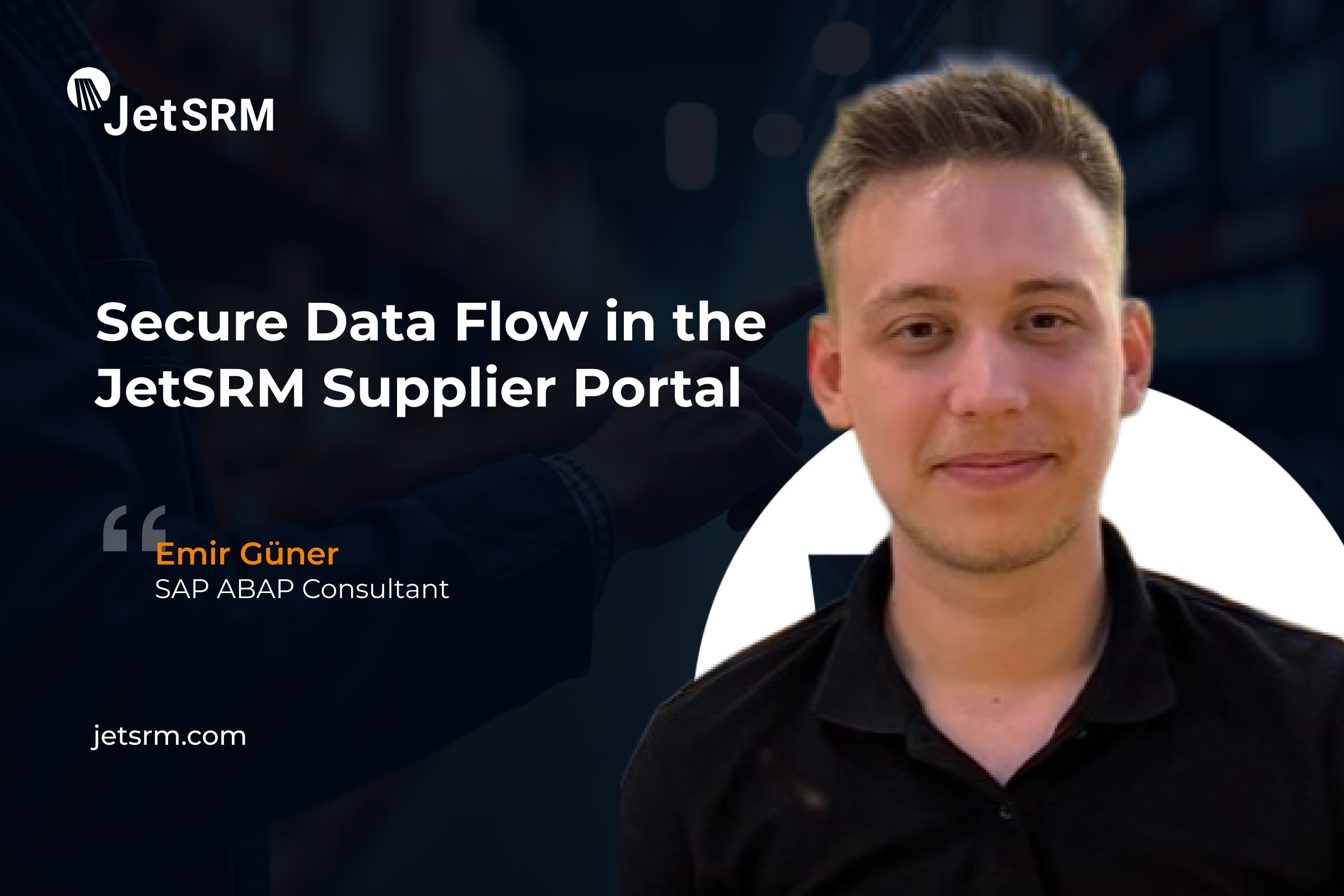
Developing new processes on the JetSRM Supplier Portal is not just about writing code; it is a strategic initiative that combines user experience, data accuracy, and secure integration. With well-designed screens, suppliers can easily enter data, the system validates it at the source, and securely transfers it to SAP through a controlled integration layer.
As a result, speed, trust, and efficiency reach the highest level for both the organization and its suppliers.