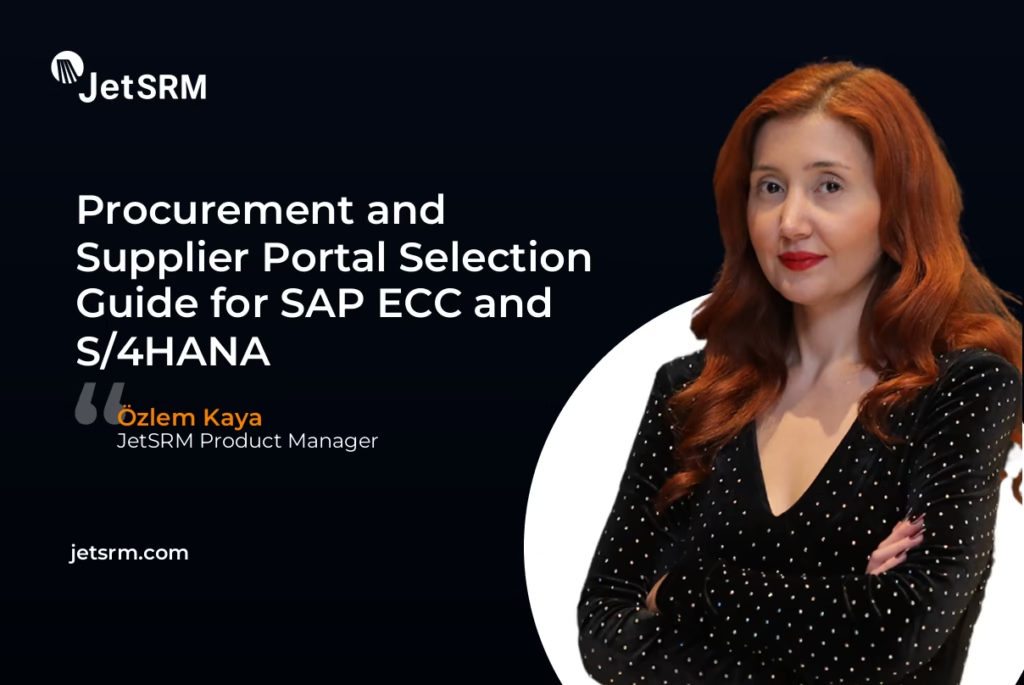
A supplier portal is a software solution that lets businesses centralize procurement, ordering, contract, and payment processes on a single digital platform by integrating directly with an ERP system such as SAP.
Working with suppliers can often be time-consuming and demanding. Supplier portals, also known as procurement portals, are designed to eliminate the common problems that arise in supplier relationships. They make it possible to manage procurement processes from a single hub, while also bringing finance, quality, and R&D teams into the process wherever supply chain management touches their work. So which supplier portal should SAP users choose to run their supply chain quickly, transparently, and efficiently? What criteria matter most when selecting the right procurement management software? This article answers both questions.
What Is a Supplier Portal (Procurement Management Software)?
A supplier portal is a system that allows businesses to run their procurement processes digitally. It centralizes order creation, approval workflows, supplier management, quote collection, and budget tracking on a single platform. This way, businesses get instant access to the information they need and manage all supplier communication from one place.
What to Look for in a Supplier Portal as an SAP User
1. A Portal That Integrates Directly with SAP
If you run SAP as your ERP system, you need a supplier portal connected to SAP so communication with suppliers stays seamless and secure. This type of portal lets you manage every step of the supply chain, from quote to order and from contract to payment, in line with your SAP system. Integration between systems reduces the need for duplicate data entry and the errors that come with it, letting procurement teams move faster and more effectively.
JetSRM is a supplier portal that runs directly inside SAP, with no extra integration required. This preserves the integrity of your SAP data while enabling seamless data flow across procurement, invoicing, and payment processes, so you can manage the entire cycle end-to-end on a single platform. In fact, SAP ending support for SRM in 2027 is pushing many companies to look for an alternative supplier portal that works inside SAP.
2. Automation and Approval Workflow Management
Automating procurement processes removes manual approval steps and significantly boosts operational efficiency. Automated workflows route requests, quote approvals, and orders to the right people quickly, and teams can see in real time exactly where a process is waiting.
3. User Experience
Another important criterion when choosing a supplier portal that fits your needs is whether the system offers a user-friendly experience. Complex, hard-to-navigate interfaces slow down workflows, reduce employee productivity, and increase error rates. JetSRM’s user-friendly interface lets teams manage quotes, orders, and approval steps from a single screen.
4. Budget and Spend Control
Budget and spend control lets procurement software keep your finances consistent and track spending against your planned budget. The system monitors spending in real time, prevents overspending, and flags cost mismatches early, so businesses can put their resources to better use.
5. Data Security and Process Visibility
Guaranteeing data security is one of the most important steps in choosing the right supplier portal. The system should protect procurement and financial data from unauthorized access while preserving its confidentiality and integrity. Process visibility, meanwhile, means every step of the procurement process is traceable, letting managers track supplier performance in real time and act on decisions with more confidence. You can read more about how secure data flow works inside JetSRM.
6. An Industry-Specific Solution
Every industry has different needs. In automotive, for example, quality certificates and documentation take priority, while in food, fast delivery and supplier reliability matter most. An industry-specific supplier portal develops solutions tailored to the particular requirements of your field, so you meet not just standard process steps but the requirements unique to your industry too.
7. A Flexible, Customizable, Modular Structure
Flexible, customizable supplier portals let you build a system that fits your company’s own workflows. JetSRM’s modular structure makes it easy to adapt to the needs of any business. You can select and add only the modules you need, and manage your processes using only the functions you actually use. If you have a unique process outside the standard modules, the JetSRM team can build new modules specifically for that process and integrate them into your system.
8. Unlimited Supplier Participation and Scalability
Scalability is an important factor for long-term efficiency when choosing a supplier portal. As your number of suppliers grows, the system’s performance shouldn’t degrade and management shouldn’t become more complex. A portal that supports unlimited supplier participation protects your growth potential and strengthens collaboration. A structure that accelerates the supplier onboarding process also makes it easier for new suppliers to adapt to the system.
How Does JetSRM, the SAP Supplier Portal, Simplify Your Processes?
Choosing the right supplier portal comes down to managing your processes in an integrated, visible, and efficient way. At JetSRM, we respond directly to that need: we digitize supplier processes end-to-end, giving you speed, control, and flexibility.
Our fully SAP-integrated structure ensures seamless data flow between procurement, invoicing, and payment processes, making information transfer between systems smooth and minimizing manual errors. Our modular architecture lets your business pick only the processes it needs, avoiding unnecessary costs. With our user-friendly interface, teams can manage quotes, orders, and approvals from a single screen.
Limitations and Things to Keep in Mind
These evaluation criteria offer a general framework, but every business has a different supply chain structure. Your existing SAP modules, number of suppliers, and industry requirements can all change which criterion matters most to you. For that reason, we recommend testing a solution with a demo tailored to your own process map before committing to a supplier portal.
Frequently Asked Questions
Are a supplier portal and procurement management software the same thing?
Largely, yes. A supplier portal is a type of procurement management software that puts extra emphasis on interaction with suppliers. Both digitize order, approval, and payment processes, but supplier portals focus more heavily on supplier participation and collaboration.
Why does a company running SAP need a separate supplier portal?
Standard SAP modules can offer a limited interface for direct interaction with suppliers. A supplier portal that runs inside SAP brings supplier communication, quote collection, and approval workflows together on one platform without extra integration costs.
What is the most common mistake when choosing a supplier portal?
The most common mistake is focusing only on price while overlooking long-term criteria like SAP integration, data security, and scalability. This can lead to added integration costs or a system change down the road.
Conclusion
Choosing the right supplier portal is a strategic investment for your business. SAP integration, automation and approval management, user experience, budget control, data security, industry fit, modularity, and scalability are all factors you should weigh in your decision. Focusing on these criteria makes your work easier today while supporting sustainable growth for the future. Get in touch with JetSRM to manage your procurement and supplier processes more efficiently.